
ERP Solutions
Custom ERP Solutions
Treat ERP as a staged operational system rather than a single oversized launch, beginning with the workflows and data boundaries that create the greatest daily friction.
Discuss this service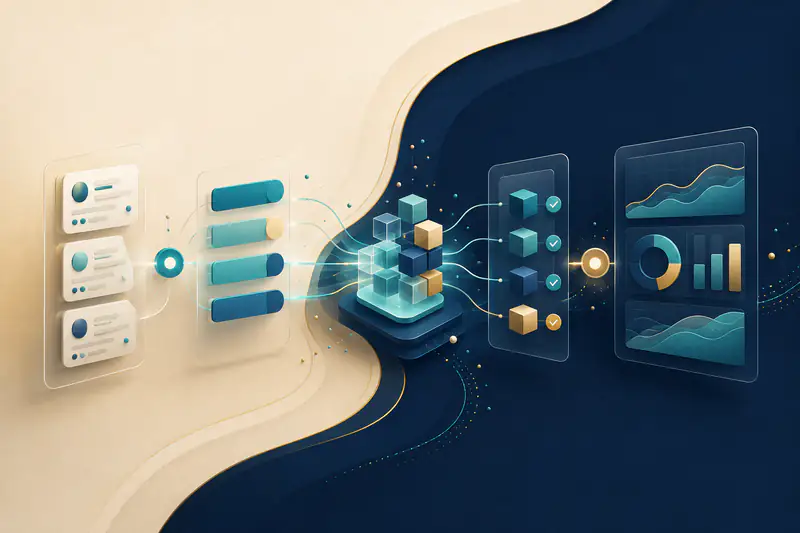
When it fits
Built for a real operating need.
- Businesses repeating the same operational data across several tools
- Teams that need selected ERP capabilities rather than an unnecessary all-in-one replacement
- Organizations planning a staged modernization of a legacy operational system
Capabilities
What the engagement can cover.
- Operational workflow and master-data modelling
- Inventory, purchasing, approvals, fulfilment, and reporting modules as required
- Role-based access and traceable business events
- Migration and integration with finance, CRM, commerce, or other existing systems
Process
A clear path from constraint to dependable system.
Discover
Identify the highest-cost process gaps, data owners, controls, and dependencies.
Sequence
Choose a first module that delivers operational value without requiring an unsafe full-system replacement.
Implement
Build and validate workflows with the people responsible for the underlying business process.
Expand
Add connected modules only after the earlier data and adoption patterns are dependable.
Intended outcomes
What the work is designed to improve.
- A single accountable flow for selected operational work
- Reduced duplicate entry and clearer handoffs between teams
- A staged path away from fragile spreadsheets or legacy tools
Deliverables
Concrete outputs for the next stage.
- Process and data architecture
- Prioritized ERP module implementation
- Roles, controls, integrations, and reporting
- Migration, rollout, and operational documentation
Questions
Useful answers before the first conversation.
Do we have to replace every existing system?
No. A staged ERP program can preserve useful systems and connect or replace only the areas that create the most risk or duplicated work.
Can we begin with one module?
Yes. Beginning with a bounded workflow such as approvals, inventory visibility, or order operations often reduces delivery and adoption risk.
How is data migration handled?
Migration is treated as its own workstream: source assessment, mapping, cleaning rules, test imports, reconciliation, access controls, and rollback planning.
Next step
Bring us the real constraints.
We’ll use them to frame a practical first conversation.
Work with Yazhi